You have probably tried it. Ten minutes, cross-legged, an app telling you to focus on the breath while your mind replayed a conversation from Tuesday. Maybe you lasted a week. Maybe you lasted four minutes.
Hating meditation isn't a character flaw, and it doesn't disqualify you from mindfulness. Sitting still with your eyes closed is one method, and it suits a particular temperament — usually one that likes quiet rooms and doesn't mind being alone with its own thoughts. If that isn't you, the answer isn't more discipline. It's a different set of exercises, built around things you already do: walking, eating, listening, and moving from one part of your day into the next.
Mindfulness, stripped of the packaging, is the practice of noticing what is happening while it is happening — including noticing that your attention just wandered. That is it. No incense required. The cushion is a delivery system, not the point.
Some people take to it immediately. Others find that closing their eyes for ten minutes turns the mind into a courtroom, with the day's mistakes read out in order. If that sounds familiar, forcing yourself to sit longer is unlikely to help. A gentler route is to attach attention to something you are already doing, so the body has a job and the mind has somewhere to land.
The five exercises below are not a diluted version of meditation. They train the same skill — noticing, returning, noticing again — while you are in motion. Do them badly. Do them for thirty seconds. Consistency matters far more than duration.
A note worth taking seriously: if attention practices bring up distressing memories or leave you feeling unsteady, stop and speak to a qualified professional. Nothing here replaces that.
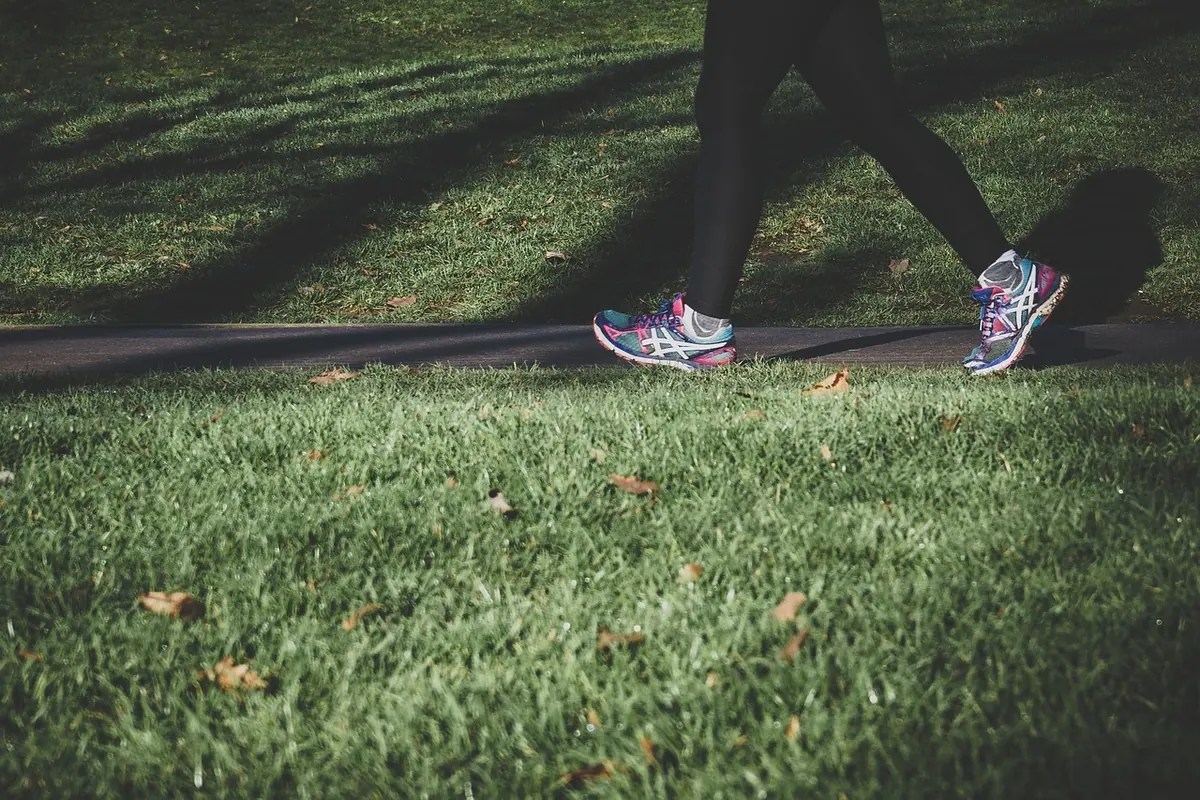
Most walking is transport. You leave the flat, and by the time you arrive you remember almost nothing of the route. That gap is the practice.
Pick a walk you do regularly — to the bus stop, to the shop, around the block after lunch. For the first two minutes, phone in pocket, give yourself three questions.
You will lose track of all three within seconds. That isn't failure. The moment you notice you're planning dinner is the moment the exercise worked — catching the drift is the rep, the way lifting is the rep.
If pace is the problem, try the slower version: walk to the end of the road and back at half your usual speed, feeling the weight shift from heel to toe. It feels ridiculous for about ninety seconds, then it doesn't.
Meals are where most of us disappear. Fork, phone, next fork — a plate emptied by someone who wasn't really there.
You don't need to eat a whole meal mindfully; nobody with a job and a family does that. Take the first bite. Put the fork down. Chew slowly enough to notice the texture, the salt, the temperature. Then pick the fork back up and eat normally.
The interesting part comes afterwards. You may find you enjoyed the food more than expected, or that you were eating out of boredom rather than hunger. Both are useful information, and neither tends to arrive during a formal session.
Conversation is the hardest place to practise, because it exposes how much of the time we spend composing our reply instead of hearing what is said.
Choose one conversation a day — a colleague, a partner, the person at the till — and commit to a single rule: don't start building your answer until they finish the sentence. Not until you think they're finished. Until the actual end.
For most people this is surprisingly hard, and the difficulty is the point. You'll notice the itch to interrupt, the jump to a similar story of your own, the half-formed judgement about where this is going. Notice it, let it sit, and keep listening.
Attention is one of the plainest forms of generosity you can offer another person — and it can be trained in four minutes of ordinary conversation.
One more version, for meetings and group chats: wait a full beat before responding. Good questions tend to live in that beat.
Your day has borders: the moment the laptop closes, the moment the front door opens, the moment the kettle boils. Most of us cross those borders without noticing and carry the last hour straight into the next one. Each crossing is a free trigger — no app, no cushion, no ten minutes.
Pick two transitions and attach one small check to each:
The point isn't the breath. It's the habit of noticing the boundary between doing and doing. After a few weeks, a closed laptop starts to mean what it says.
Queues, red lights, a boiling kettle, a download bar, a person who says "let me just check that." Dead time is where the phone eats your attention. Claim a few of those minutes back.
The method is deliberately dull, which is why it works. Pick something in front of you and describe it silently in three details. The scuff on the shopping trolley, the colour of the traffic-light housing, the sound of the coffee machine. Then one short sentence to yourself: I'm waiting. No fixing, no judging.
You are not going to feel serene in a supermarket queue because you noticed a scuff mark. You are practising the mechanics of returning attention from wherever it went, which is the whole skill, and which does get easier with repetition. If you reach for your phone in a queue — fine, most of us do. Try leaving it in your pocket for the first thirty seconds.
Don't launch all five at once. Choose the one that seems least annoying. That predicts whether you'll still be doing it in March far better than any amount of enthusiasm.
If it helps, borrow the two questions from the walking exercise and use them anywhere: What am I noticing? Where did I just go? That's a complete practice, and you can do it standing up, mid-sentence, with your coat still on.
The reason to bother is unglamorous but real. Days get a little less blurry at the edges, conversations leave fewer loose ends, and the gap between something happening and you reacting widens by a fraction. That fraction is worth more than the perfectly silent ten minutes you never quite manage to have.
Photo: Cup of Couple / Pexels